THE ANNUAL UK ANIMAL LAW CONFERENCE, THE UK’S FIRST ANIMAL LAW CONFERENCE!
Stay tuned for our next Animal Law Conference hosted in 2025 by the UK Centre for Animal Law and the Animals, Nature, & Society Research Stream (Centre for Human Rights, Birmingham City University).
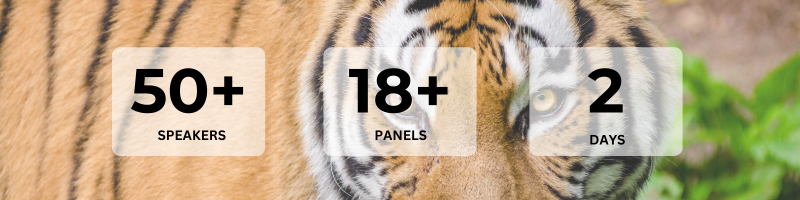
Below you can read about our 2024 conference, including speakers, keynote speakers, a detailed programme and description of the workshops.
You can watch below two keynote speaker presentations from our 2024 Annual UK Animal Law Conference. The first speaker is Philip Lymbery discussing Extinction or Regeneration: Why we all need a better legal future for animals, and our second speaker is Karen Bradshaw discussing: Wildlife as Property Owners: A New Conception of Animal Rights.
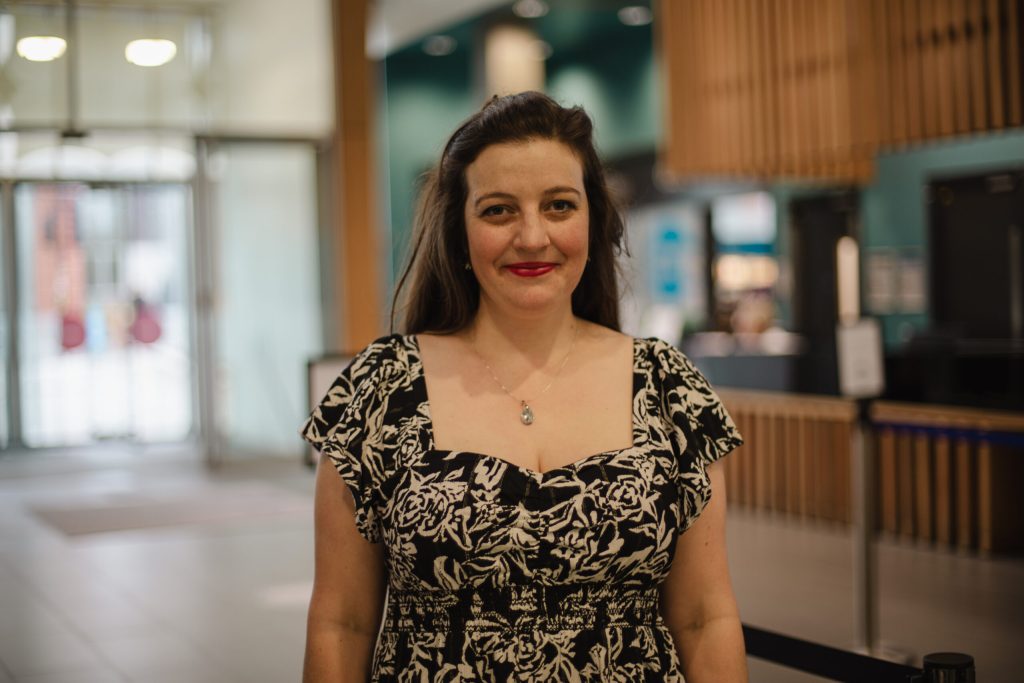
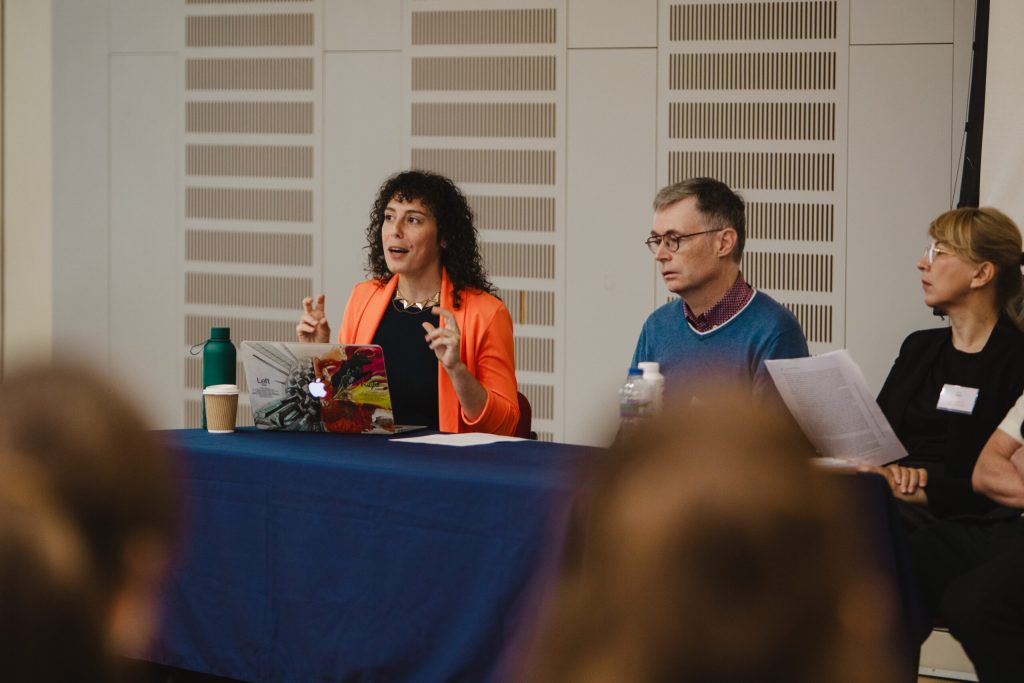
You can also view some photos captured during the conference!




Sponsored by Hartpury University
Study the online MSc in Animal Welfare, Policy and Legislation with Hartpury University to gain the skills and knowledge you need to navigate the legal system and improve welfare standards in your chosen area. Apply theory to practice in real-world settings, supporting your progression into careers that include advocacy and policy advisory roles.
Keynote speakers

Pamela Frasch
Pamela Frasch, Professor of Law and the Brooks McCormick, Jr. Scholar of Animal Law & Policy at Lewis & Clark Law School, has been a pioneer in the field of animal law for over 30 years. In 2008, Pamela founded the Center for Animal Law Studies at Lewis & Clark, the first-ever academic center for animal law. She is co-author of Animal Law, Cases and Materials (Carolina Academic Press, 7th edition forthcoming in 2024)), Animal Law in a Nutshell (Thomson West, 3rd edition 2020), as well as numerous articles and book. Previously, Pamela served as the first-ever General Counsel for the Animal Legal Defense Fund.

Karen Bradshaw
Bradshaw is a Professor of Law at the Sandra Day O’Connor College of Law Arizona State University, a Senior Sustainability Scientist at the Global Institute of Sustainability, and a Faculty Fellow at Oxford Centre for Animal Ethics. Prominent national media outlets including Forbes, Fortune, The Atlantic, and The New York Times have featured Bradshaw’s research. Bradshaw is the author of several books, including the forthcoming Rights of Nature: Creating Interspecies Equity, Depolarized: How Stakeholder Collaborations are Breaking Gridlock (Columbia), and the internationally acclaimed book Wildlife as Property Owners: A New Conception of Animal Rights (Chicago). Wildlife as Property Owners was featured in the Official 2022 GRAMMY gift bags and was “highly recommended” in a Forbes book review.

Philip Lymbery
Philip Lymbery is Global Chief Executive of Compassion in World Farming (CIWF). He is visiting Professor at the University of Winchester, President of Eurogroup for Animals, and is a founding Board member of the World Federation for Animals (WFA). Philip is also a Leadership Fellow of St George’s House, Windsor Castle, Fellow of the Oxford Centre for Animal Ethics, and UN ambassadorial ‘Champion’ for the 2021 Food Systems Summit in New York. Philip regularly writes and speaks internationally on animal ethics and the global effects of industrial agriculture (factory farming). His most recent books include Farmageddon: The True Cost of Cheap Meat (Bloomsbury, 2014), Dead Zone: Where the Wild Things Were (Bloomsbury, 2017), and Sixty Harvests Left: How to Reach a Nature-friendly Future (Bloomsbury, 2022).
Our Speakers





























Our hosts

Paula Sparks
Paula is Chairperson of the UK Centre for Animal Law (A-law). She was previous in practice as a barrister at Doughty Street Chambers. Paula has an interest in animal law and regularly lectures and writes on topics around animal law and policy; she is currently a visiting lecturer at the University of Winchester where she teaches animal law and policy. She also has experience in the voluntary sector, where she worked prior to starting independent practice as a barrister.

Iyan Offor
Dr Iyan Offor is a Senior Lecturer in Law at Birmingham City University and leader of the Animals, Nature & Society Research Stream (Centre for Human Rights). Iyan conducts socio-legal and theoretical research on global animal law, global environmental law, intersectionality, queer theory, posthumanism, and law & literature. Iyan recently published his monograph Global Animal Law from the Margins.

Michelle Strauss
Michelle is in the second year of her PhD at BCU where she is researching how to include multispecies perspectives in law making. Prior to undertaking her studies Michelle practiced as a solicitor in New Zealand and the UK. Alongside her studies she is also the founder and trustee of The Animal Advocacy Project (TAAP).
Workshops
Animal Rights Moot Workshop
Ankita Shanker and Marine Lercier
There is a palpable need for the development of animal rights litigation worldwide, to safeguard animal interests effectively. The impact of such litigation can extend beyond judicial decisions, influencing new directions for scholarly research, and new ideas and priorities for policy-making in the realm of animal rights. Although judges have begun to engage in a transboundary discourse on animal protection, Animal Law proper still doesn’t exist in many jurisdictions. Moreover, there is still wide-scale resistance to Animal Law from state actors and members of the civil society. Although judges have begun to engage in a transboundary discourse on animal protection, Animal Law proper still doesn’t exist in many jurisdictions. Moreover, there is still wide-scale resistance to Animal Law from state actors and members of the civil society. The need of the hour, therefore, is to train future generations of animal rights lawyers in effective advocacy, building on global developments in the field. Our workshop is designed to help participants improve their understanding of Animal Rights Law through a speed moot. During the speed moot, participants will be given a moot problem on the spot and provided with resources on which they can rely to formulate their arguments. Participants will then present their arguments orally to a panel of judges who are Animal Law specialists. The judges will provide feedback on the participants’ oral presentations. Through this, we will conduct a live demonstration to showcase how animals are or can be legally represented in various courts (actual or future, real or hypothetical). Participants will learn how to think on their feet to persuade judges of their arguments, taking inspiration from real-life Animal Law cases across the globe. For the non-participating audience, this will be an opportunity to observe and understand the intricacies of litigating and judging Animal Law cases.
Rights of Nature Toolkit: Protecting Rivers and Fish
Maya Pardo
Around the world, the Rights of Nature movement seeks to recognise the intrinsic value of nature by establishing legal personhood for nature. Animals are part of that natural environment by definition. What can the Rights of Nature lens add to the current approach to the protection of animals? Maya recently developed a 130pp legal guide called Rights of Nature Toolkit: How to Protect Rivers in England and Wales (https://www.kcl.ac.uk/legal-clinic/assets/rights-of-nature-toolkit.pdf), in this workshop she shares information for those who want to learn how to protect fish and wildlife from pollution and over-abstraction.
This workshop will feature a ‘legal trivia’ game to be played in teams, a practical guide to using online maps to gather evidence with a view to objecting to factory farms, and you will also go through a case study with your team.
Animals Under the UN Umbrella: Enforcing International Human Rights Workshop
Erin Leach
The United Nations system of human rights is monitored by two mechanisms: (1) charter-based bodies (such as the Sustainable Development Goals) and (2) treaty-based bodies. In this workshop Erin spotlights the latter. Looking at the general comments and concluding observations of the Committee on the Rights of the Child, Erin outlines how the treaty is presently being used to advocate for and protect animal rights. The treaty-based individual communications mechanism offers a further layer of protection and an opportunity for animal experts and advocates to add the voices of animals directly into the UN dialogue of rights. Stepping away from domestic law and straight into the international framework, workshop participants will recieve a 15-minute lesson on how to write their own communication before being challenged to do so. The workshop will finish with an open discussion on the directions for animal rights under the UN and how animal advocates may push for progress within its umbrella.